Transients
The wound↗Wells die at the hours nobody measured.
Quench and kick-off kill superhot wells. No instrument on the market is rated to watch those hours in the 375–450 °C class.
 ZEMANIUM
Geothermal is firm power under every continent, priced out by its own instruments. We build the instruments: a 450 °C well profiler the industry could not keep alive, and the qualification standard the whole segment is missing. Five inventions behind them, filed and simulated to their bench gates.
The readout engine and digital furnace are running code today. Five virtual campaigns have completed against their bench gates, and the cost model is audited. Every figure on this page carries its label. Zero measured duty hours stand today — every bench run judges a frozen prediction registered before it.
We are a qualification company, so we grade ourselves first. The simulations carry their labels and the Shift-Latch falsifiers were published before the bench. Corrections go in the open record, including our own. The hardware record begins with R1 inside 30 days.
Superhot wells die at transients. Across the 20-well supercritical base rate, failures are dominated by thermal stress at quench and kick-off — the hours nobody has instrumented.
Quench and kick-off kill superhot wells. No instrument on the market is rated to watch those hours in the 375–450 °C class.
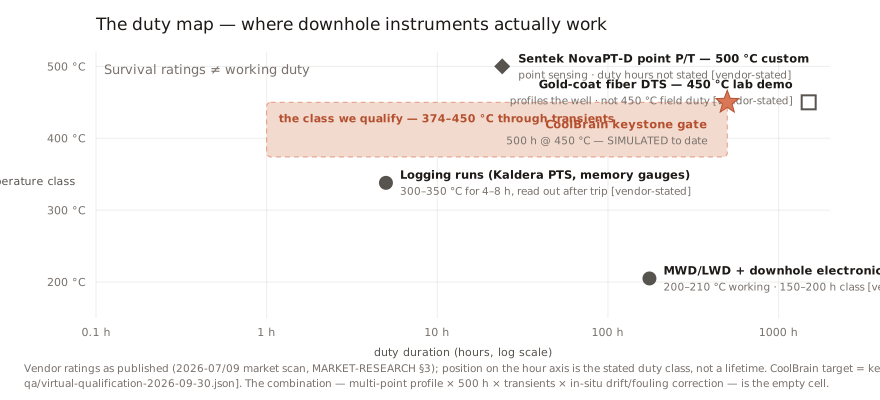
The working stack tops out near 200 °C for 150–200-hour duty. The 350 °C tools are rated for four-hour logging runs, then they come out. Nothing on the market carries a duty record.
No test standard, no witnessed record, no referee. The 500-hour cell at 450 °C is empty on every duty map in the field.
Platform
Anvil keeps every active component below 100 °C while a passive Inconel waveguide measures 450 °C-class temperatures at five points — correcting the drift and fouling that kill downhole instruments, in place, in the well.
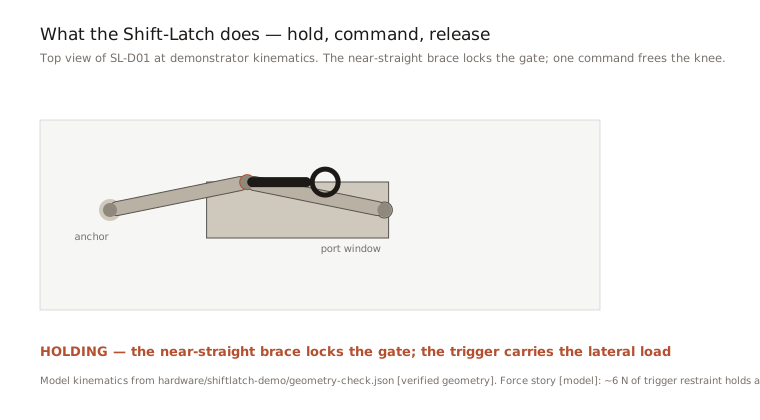
A reservoir valve with no moving parts in the hot zone. It reroutes flow on command through a 54–137.6 µm window simulated.
Keeps the hot branch conductive across three chemistry classes, so the measurement survives the fluid instead of dying in it.
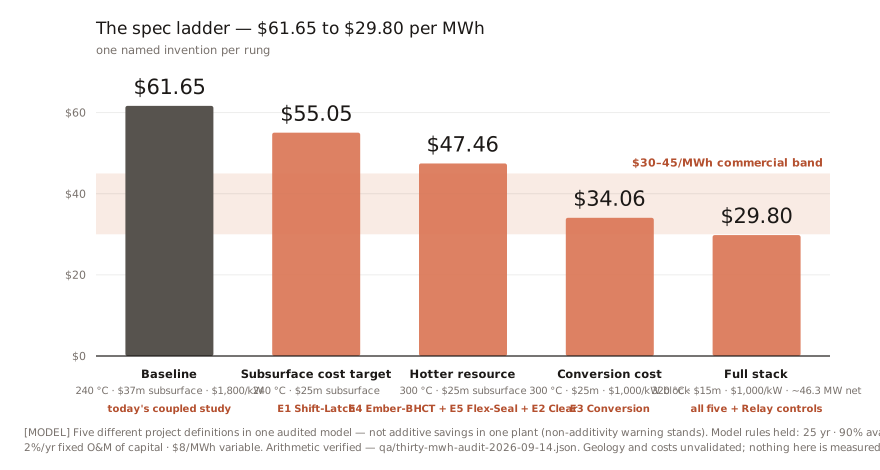
Factory-built modular flash+binary power block at the row allowances ($757–$1,012 per gross-kW, installed scope). The E3 invention target is $890–1,145 per gross-kW at ladder duty — named, scoped, mechanism selected simulated.
Manages the bottomhole temperature while drilling hotter than the current 350 °C class.
A seal designed for 25 years of thermal transients, where the current tools are rated for logging runs of four hours.
Three product lines carry the inventions to market: Relay commands the heat, Shift reroutes the reservoir, Flex keeps the well alive through the cycling.
Method
Each invention runs a full virtual qualification campaign first: physics simulation, Monte Carlo, pre-registered falsifiers, and gates identical to the bench, judged by the same gate-checker code the bench will use. Fifty-six contracts are green simulated. When a campaign kills a mechanism, the failure becomes a named redesign lever in the published record, which is why the Shift-Latch damage ranking now sets the bench's measurement priorities.
ARPA-E funded three superhot categories: well construction, heat extraction, and testing and qualification infrastructure. The third has no occupant. Anvil ships with the qualification basis and the first witnessed 500-hour record at 450 °C, entry number one in our own standard. Whichever developer wins the superhot race, the category grades on our yardstick.
Named in the same breath
Capital at the frontier verified
The combination of profile, duration, transient handling, calibration and duty class exists nowhere else in the segment.
R1 within 30 days: the echo chain and the corrected readout hold their gates against deliberate attack plan.
R2 within 90 days, with deliberate drift and fouling attacks on the instrument plan.
R3 in Q1: the segment's first witnessed 500-hour qualification record at 450 °C — presented at Stanford's superhot workshop in February plan.
One founder today. Four founding seats open — founding equity, and named artifacts: your name on the paper and on the qualification record.
Co-founded and shipped a data platform in mining, then built this field's first adversarially-verified evidence base.
Own the waveguide and the DSP. Founding seat open.
Own the tool that survives the trip. Founding seat open.
Own the yardstick and the witnessed record. Founding seat open.
Own the field reality check. Founding seat open.
Nothing yet, and every performance figure on this site is labeled simulated for that reason. The chain proof lands within 30 days, first hot data within 90 days, and the witnessed 500-hour record at 450 °C in Q1. Gates close on measurements, IEEE-323 discipline.
The working tool stack tops out near 200 °C for 150–200-hour duty, and the 350 °C tools are rated for four-hour logging runs. Anvil measures 450 °C-class temperatures at five points with all active components below 100 °C, on a duty basis, with in-place correction for drift and fouling. Sentek, Kaldera, fiber DTS and Hephae cover parts of the picture. The combination of profile, duration, transient handling, calibration and duty class exists nowhere else.
Duty classes, a test taxonomy and a witnessed-report contract — the standard the 375–450 °C segment has never had. Anvil ships with it, plus entry number one in the standard: the first witnessed 500-hour record at 450 °C.
Instruments and witnessed qualification. Three product lines carry them: Relay commands the heat, Shift reroutes the reservoir, Flex keeps the well alive through the cycling. The qualification service is a second revenue engine: developers need a referee.
The kill conditions are published before testing (the Shift-Latch falsifiers F1–F5 are in the dossier). If a gate fails, the failure becomes a named redesign lever and a published result.
Named milestones: the R1→R3 numbers, the Rev B field string, design-partner wells, first commercial subsystems, and the qualification service in revenue.
Thirty minutes with the team, the model and the published record.
The pre-seed is open at $2–3M with a $1–1.5M lead, against a dated results schedule. Operators can start design-partner conversations now, engineers get founding seats, and labs get co-authorship on the qualification record.
A short description is enough. Please don't include confidential records.