Read this room in one sitting or drop into any section. The reading path below mirrors the navigation. Two things carry it: the evidence, labeled at every number, and the stop rules, written before the spend.
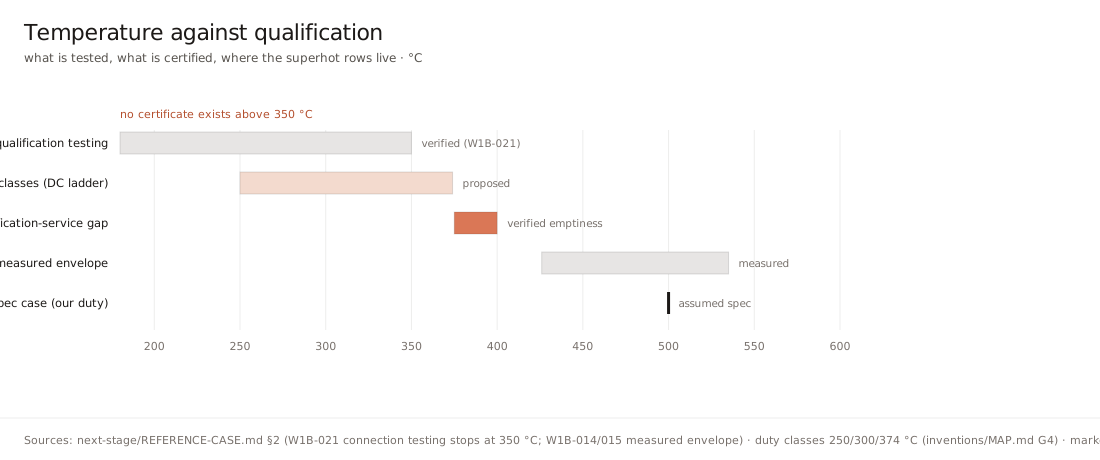
Superhot resource turns geothermal from a site business into a product business, only if somebody certifies the hardware that survives it. That certification does not exist above 350 °C. Building it is the company.
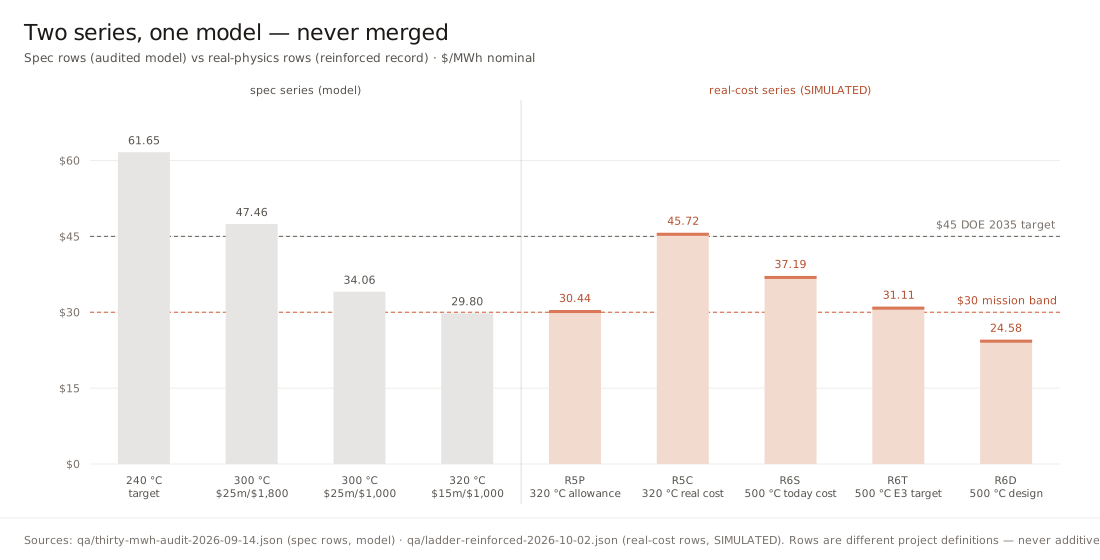
The ladder is one audited model, not a promise. Its rows are different project definitions and are never added together. The spec series says what would have to become true; the real-cost series says what the same project costs once the conversion physics and quoted-cost classes are honest. The reinforced run reproduces the audited $29.80 row exactly — to nine decimal places — before it re-prices anything.
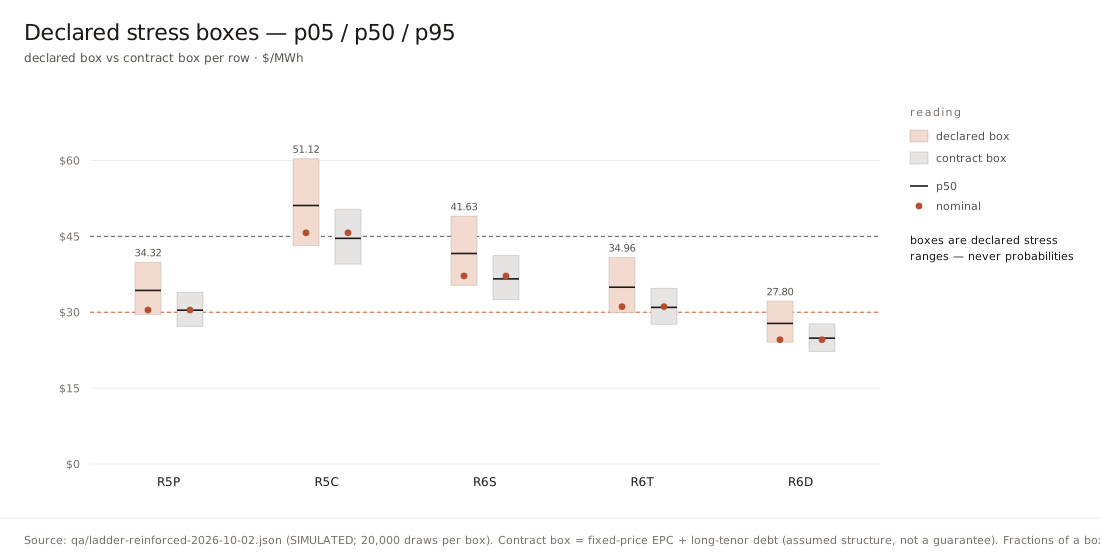
The mission number is a design spec, not a forecast. R6D is the surface cost (about $970 per gross-kW) that would have to land for a 500 °C doublet to hold $30 across 80% of the declared stress box and 99.9% of the contract box. The contract box assumes fixed-price EPC and long-tenor de-risked debt. It is a commercial structure, not an engineering result.
Above 374.1 °C and 22.06 MPa water stops boiling and starts behaving like a dense fluid. ARPA-E calls that superhot. About two dozen wells have touched it. None has produced from dry superhot rock.
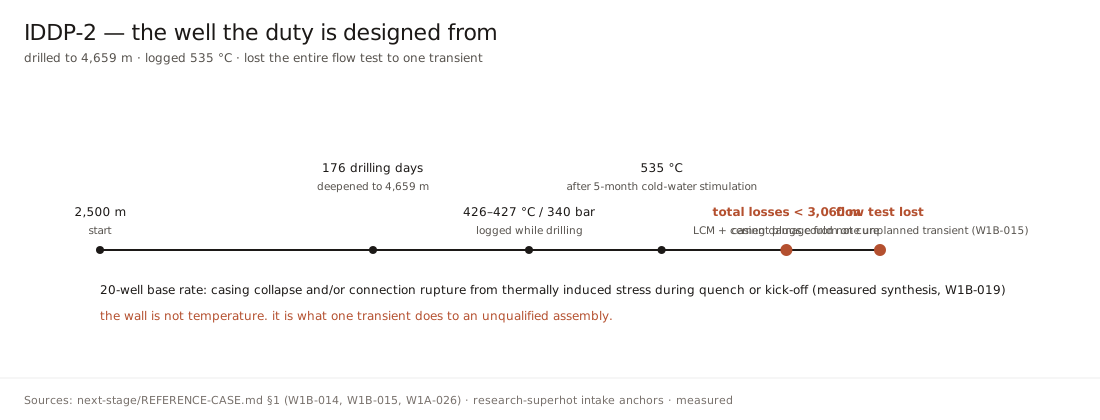
The well that is the market's failure and our thesis in one object. It drilled to 4,659 m in 176 drilling days, logged 426–427 °C at 340 bar while drilling, and reached 535 °C after a five-month cold-water stimulation. Then one unplanned thermal transient damaged the casing above 2,300–2,400 m and the entire flow test was lost. Not temperature. A cycle.
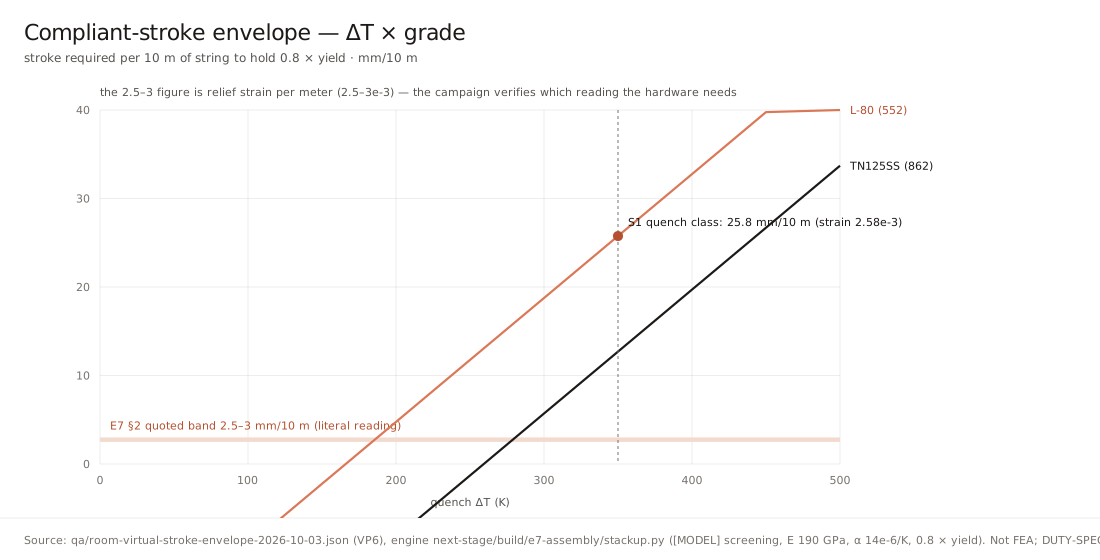
The 20-well record says the same thing in the aggregate: casing collapse and connection rupture from thermally induced stress during quench or kick-off. A single quench of 350 K drives fully constrained axial stress to about 931 MPa against L-80 yield of 552 MPa. The assembly, not the steel grade, is the design problem.
The commercial wall is the certificate. Thermal-service connection testing stops at 350 °C. Between 375 and 400 °C there is no qualification service to buy. Every superhot project is therefore first-of-a-kind by definition, and priced like it.
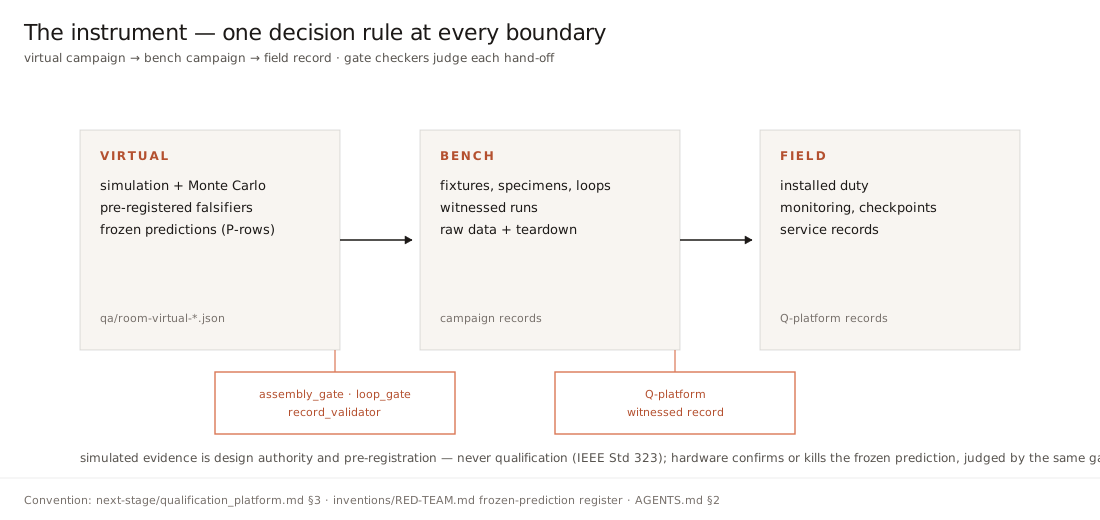
This is how we work and what we sell at the bottom: a qualification layer. Pre-registered falsifiers, frozen predictions, gate checkers, hashed records. The bench confirms the prediction; it does not gate our ability to have results.
| gate checker | what it judges | contracts |
|---|---|---|
| assembly_gate.py | E7 campaign record vs frozen duty spec | A1–A11 |
| loop_gate.py | E9 bench run vs frozen task set | L1–L8 |
| well_cost_case.py | E8 cost case stability (E8-F1) | W1–W5 |
| record_validator.py | witnessed record integrity (Q platform) | C1–C10 |
| latch_campaign.py | E1 latch campaign (bench + virtual) | one decision rule |
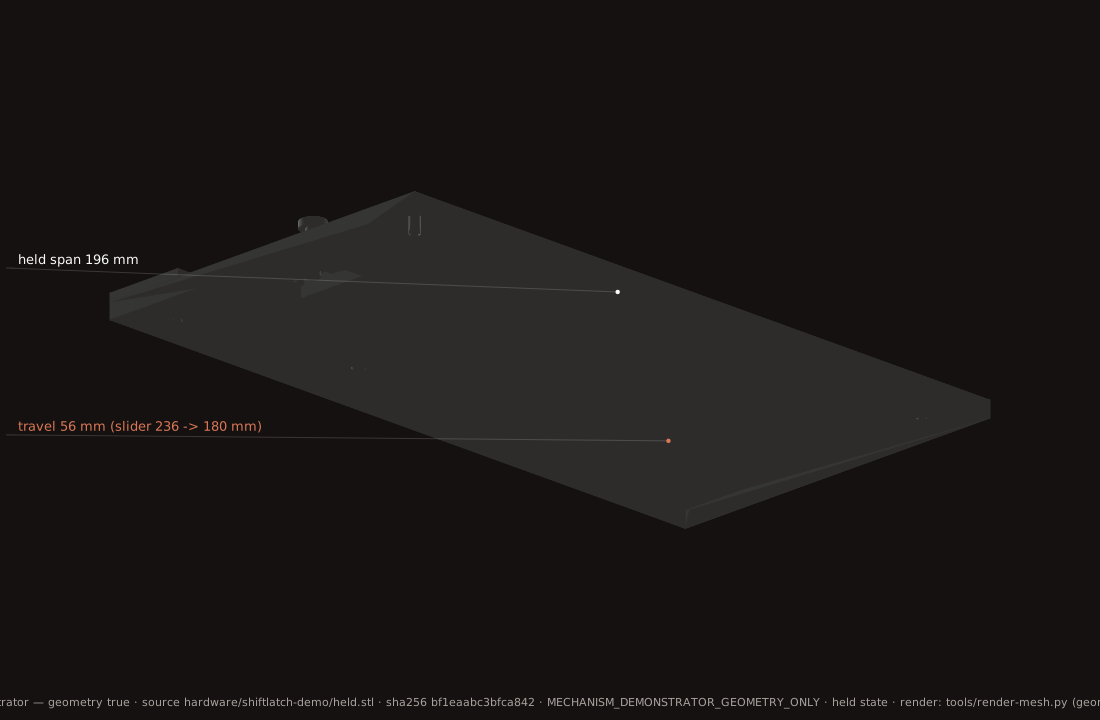
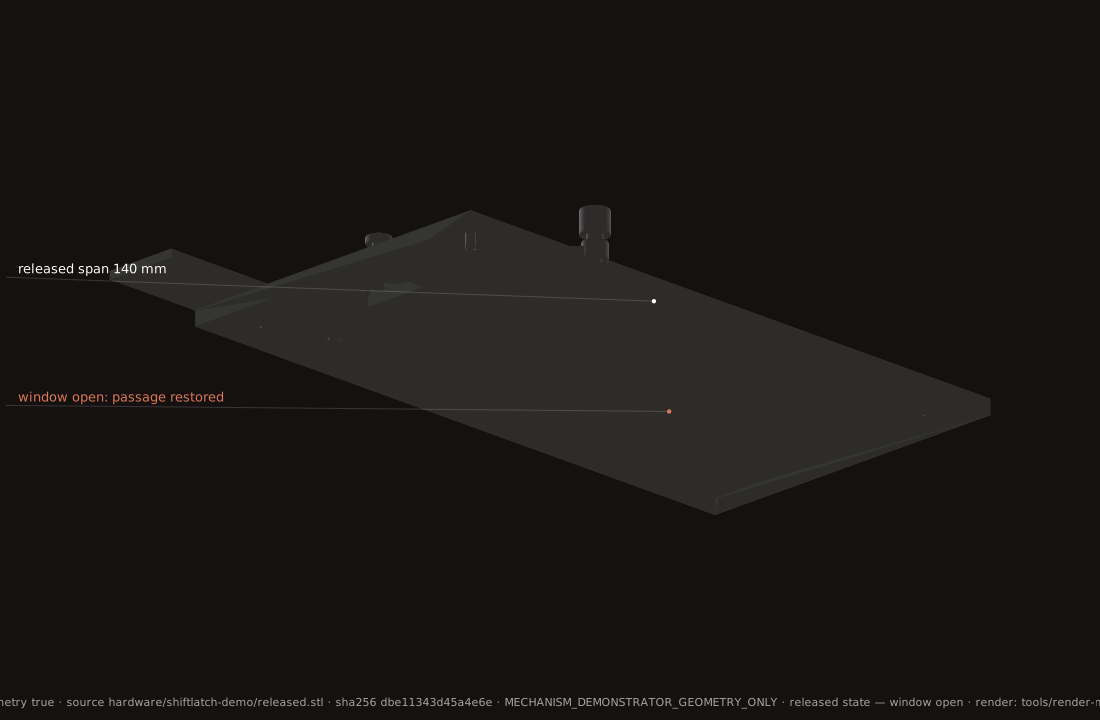
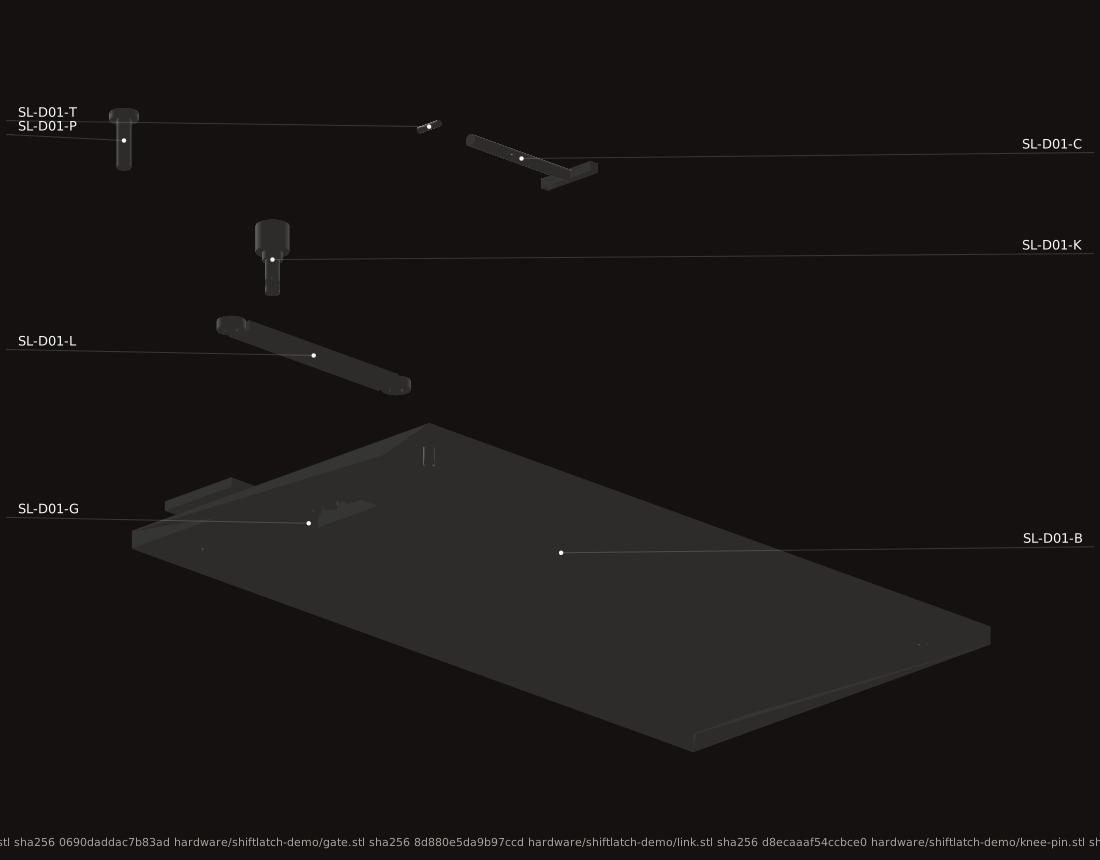
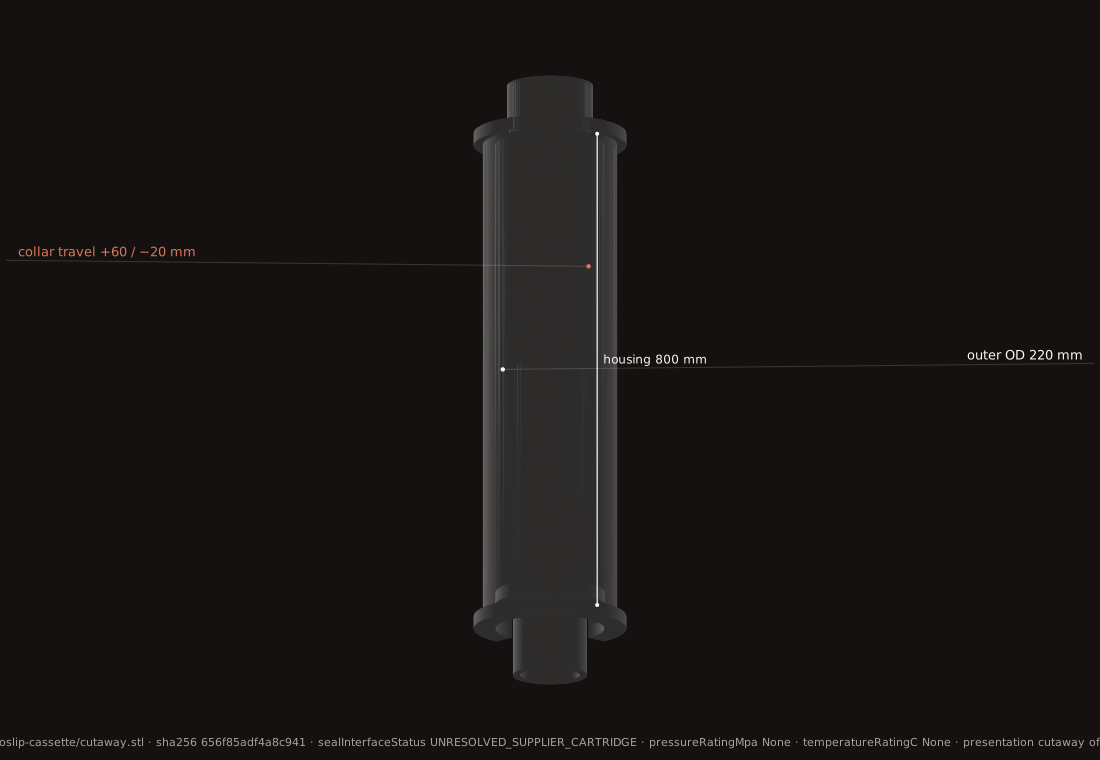
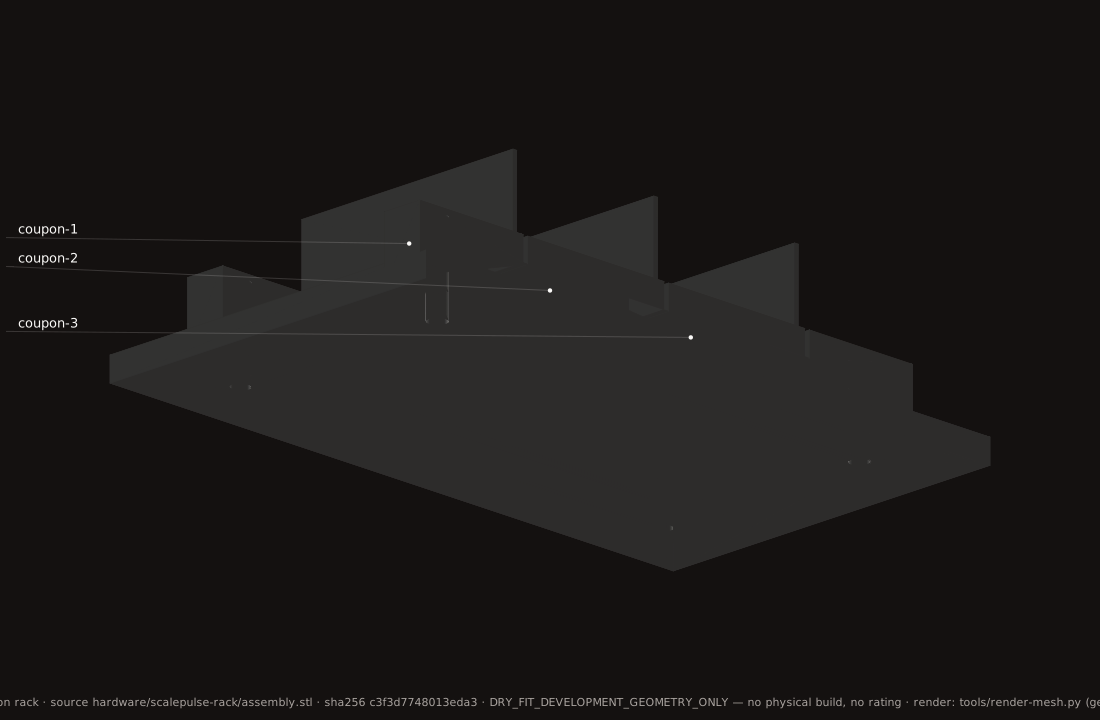
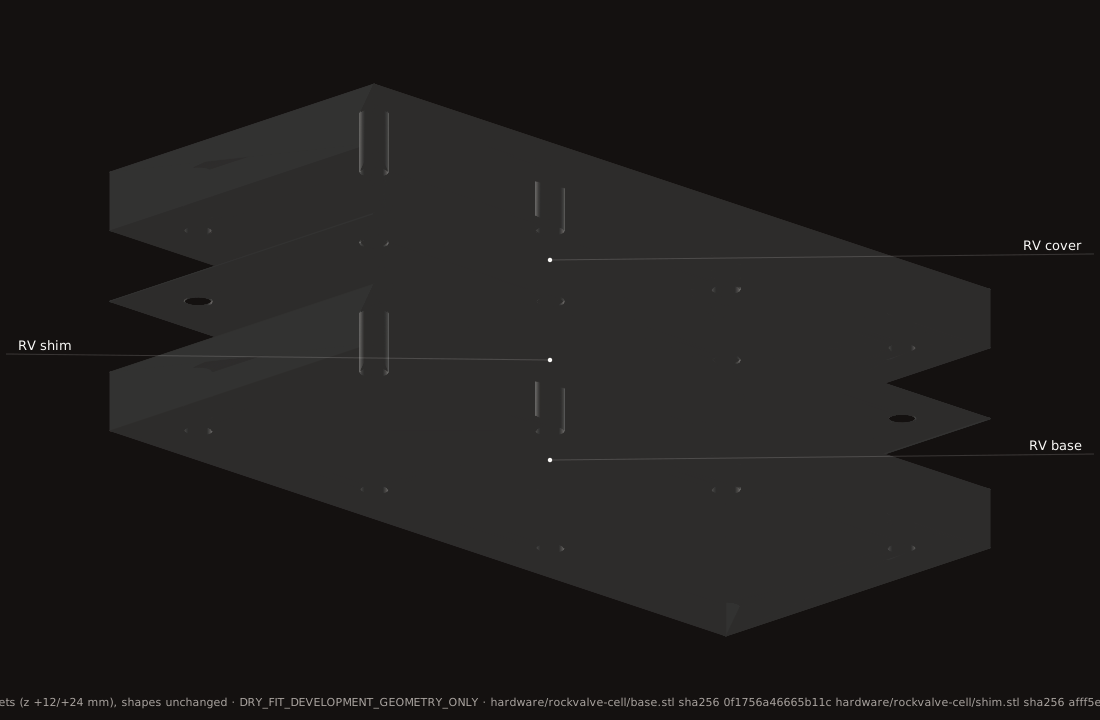
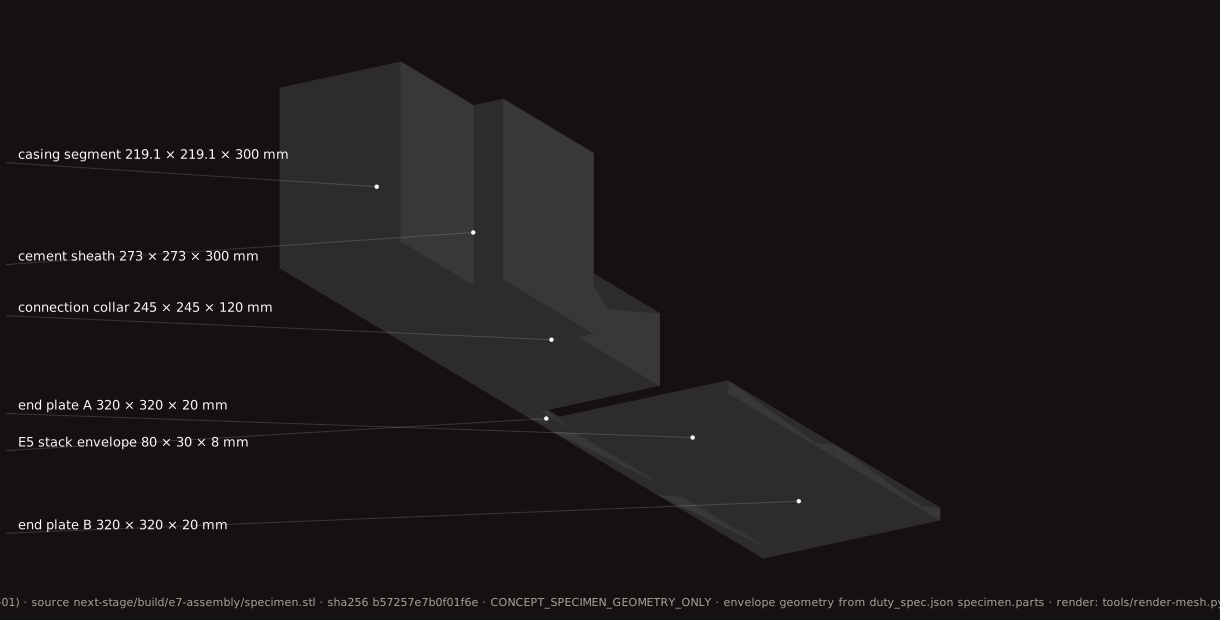
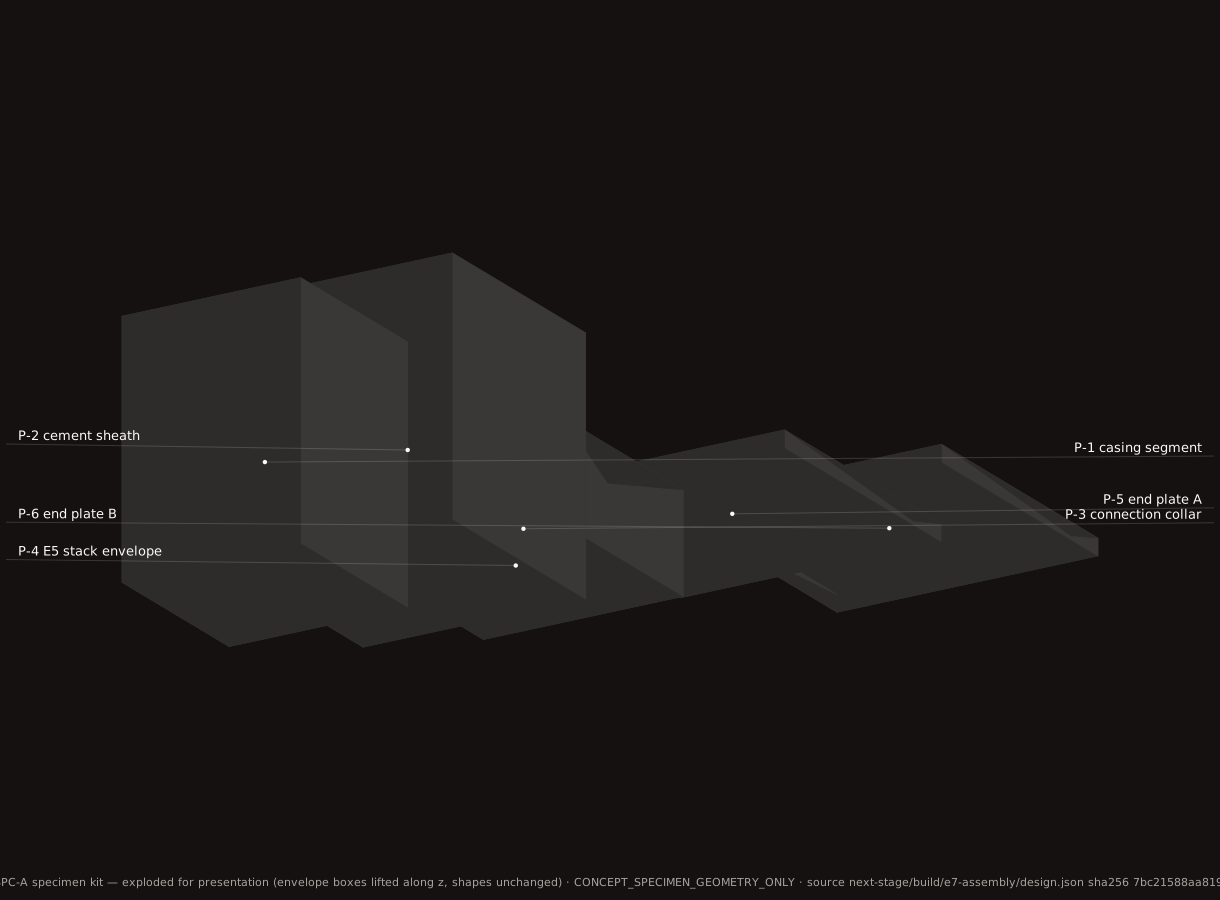
The renders below come from the actual CAD geometry of each package. Nothing is invented; the status labels travel with the parts.
| machine | job | frozen gate | frozen prediction (P-row) | status |
|---|---|---|---|---|
| E0 | downhole sensing (waveguide profiler) | ±5 °C through 500 h at 450 °C with in-situ drift correction | P-E0-01 | readout demo + digital furnace, 37 tests green |
| E1 | commanded release (the latch) | hold → command → full travel → ≥90% conductance recovery | P-E1-01 | demonstrator built; window class 54–138 µm |
| E2 | chemistry control (scale) | separated brine deposit rate ≈ 0 (<10% of the SSI-1.5 class) | P-E2-01 / P-E2-02 | six architectures ranked A–F; selection rules frozen |
| E3 | conversion (flash + binary) | scope-matched operating map within 0.90–1.15× the audited anchor | P-E3-01 / P-E3-02 | mechanism selected 2026-10-02; RFQ open |
| E4 | drilling control (BHCT) | duty band held at the worst corner (0.1 K margin) | — | band held at worst corner (virtual) |
| E5 | moving pressure seal | leak rate held through designed stroke at 250/300/320 °C cycles | P-E5-01 | seal claim blocked prior art; method sells |
The demonstrator and the duty hardware are drawn in the same language on purpose. A mechanism that only works in a rendering is a poster; a mechanism that survives its gate is a machine.
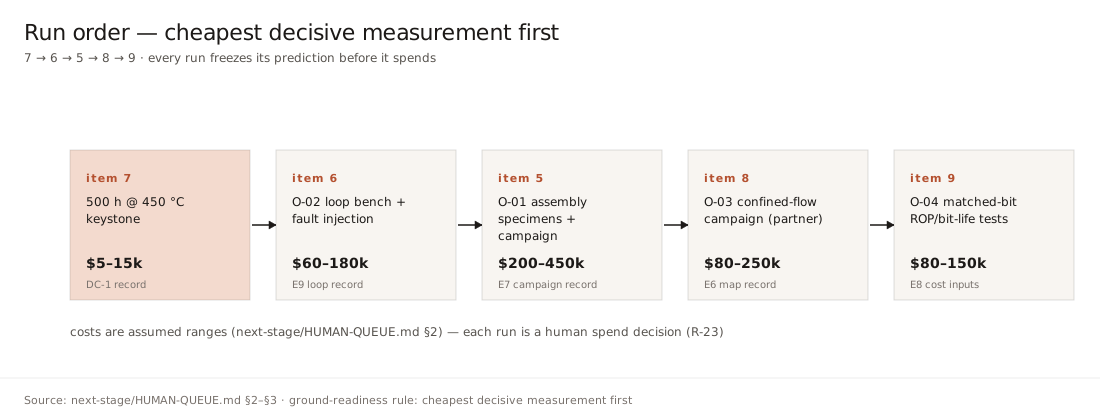
Every item here is modeled to the bench: frozen specs, gate checkers written, fixtures designed, RFQs drafted. Section 07 prices the run order.
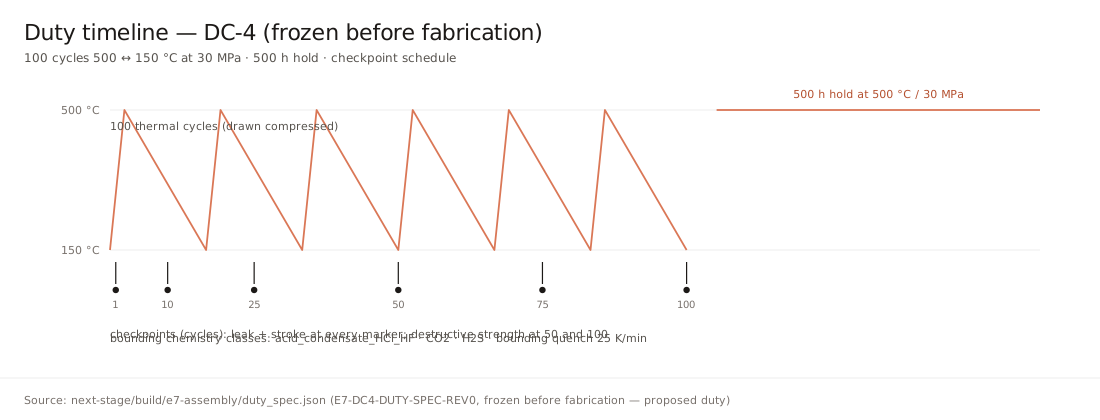
The same well sets the requirements. Its measured envelope (426–535 °C, 30 MPa class, acid condensate, one destructive transient) is why the O-01 campaign cycles 100 times between 500 and 150 °C at 30 MPa with a 500-hour hold, and why the chemistry classes are HCl/HF condensate, CO₂ and H₂S. The worst event in the record becomes the test plan.
Every number carries its label: measured, simulated, assumed, proposed or unknown. A simulated number reads SIMULATED everywhere it appears.
| reading | number | label |
|---|---|---|
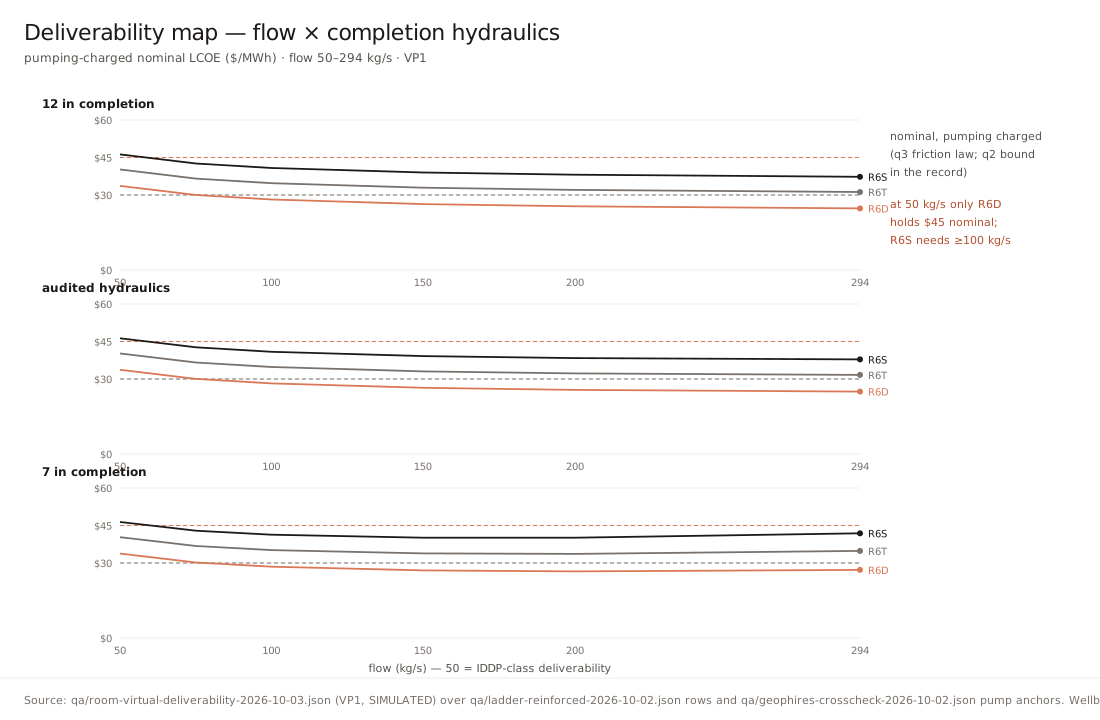
| R6S at IDDP-class flow (50 kg/s) | $46.28/MWh nominal charged | SIMULATED — band missed at today's cost class |
| R6T at IDDP-class flow (50 kg/s) | $40.20/MWh nominal charged | SIMULATED — holds the band nominal |
| R6D at IDDP-class flow (50 kg/s) | $33.67/MWh nominal charged | SIMULATED — design point holds |
| wellbore pump, 7 in at 294 kg/s | 29.14 MW — 12.7% of gross | SIMULATED (GEOPHIRES cross-check) |
| wellbore pump, 12 in at 294 kg/s | 0.67 MW — 0.3% of gross | SIMULATED (GEOPHIRES cross-check) |
Pump and treatment electricity stays separate from recovered output. The chart charges it against net electricity and never folds it into heat. The two completion classes differ by a factor of 43 in pumping power, and no measured hydraulics exists at 500 °C — that is what section 08 prices.
Nothing below waits on a decision of ours except the sends. Each run freezes its prediction before it starts and is judged by the same gate checker that judged the virtual campaign.
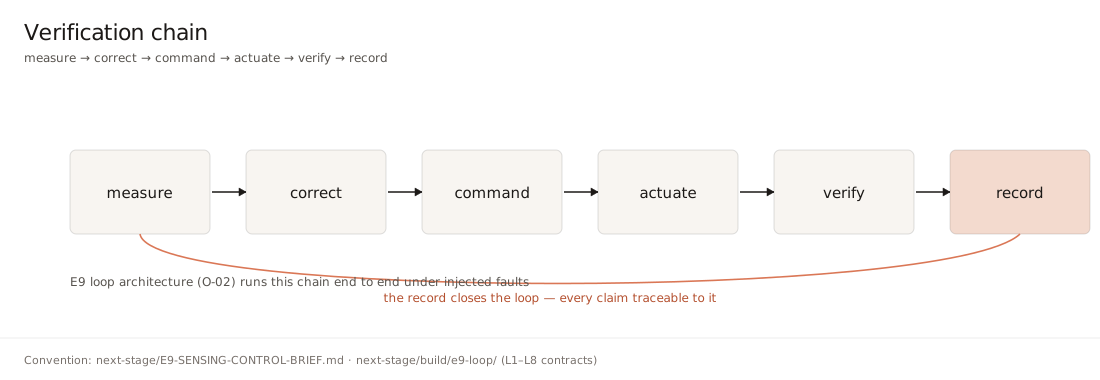
Every item in this dossier is the measurement IDDP-2 did not have. The 500-hour keystone run prices the first one at $5–15k. The O-01 campaign cycles the exact assembly class that failed above 2,300 m. The loop bench proves the control that manages transients instead of surviving them. Frozen predictions go in before any of it runs.
Seven pushes ran here, each judged by the real gate checkers, each recorded in qa/room-virtual-*.json with its seeds, assumptions and hash-bound sources. Deliverability and completion hydraulics are now bounded with numbers. The E7 and E9 gates were walked through pass, leak, growth, lockup, strength, laundering and unlabeled paths — every cheat caught by a named contract, every silent failure refused. The E8 INDETERMINATE survived wider boxes and three leave-one-anchor-out variants. The stroke divergence is charted and resolves as a strain reading the campaign will verify. The duty-class corners nobody has run are enumerated with their (basis, duty state, hours) rows.
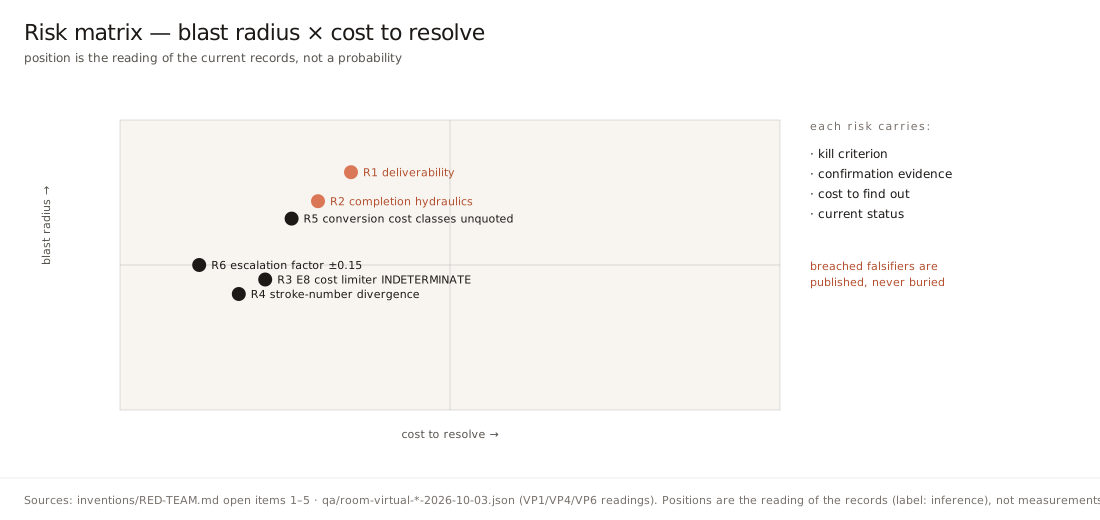
The risks below are the ones a technical reader will find anyway. Better they find ours first, with the kill criteria attached.
One unplanned quench killed the flow test. That single event is risk row one at the assembly level: the fully constrained stress of a 350 K quench runs about 931 MPa against 552 MPa yield. Compliant stroke (E5, E7) and transient-rate management are the levers. Higher-grade steel alone is not.
| risk | what kills it | what confirms it | cost to find out | status |
|---|---|---|---|---|
| 1 superhot deliverability (294 kg/s assumed vs ~50 kg/s IDDP-class) | a producer well delivering doublet-class flow | O-03 confined-flow map + deliverability logs | $80–250k (item 8) | bounded in VP1: at 50 kg/s only R6D holds $45 nominal |
| 2 completion hydraulics (7 in vs 12 in, 43× pumping swing) | measured hydraulics on the modeled doublet | O-02 loop bench + first completion logs | $60–180k (item 6) | charge quantified in VP1: 12.7% of gross at 7 in |
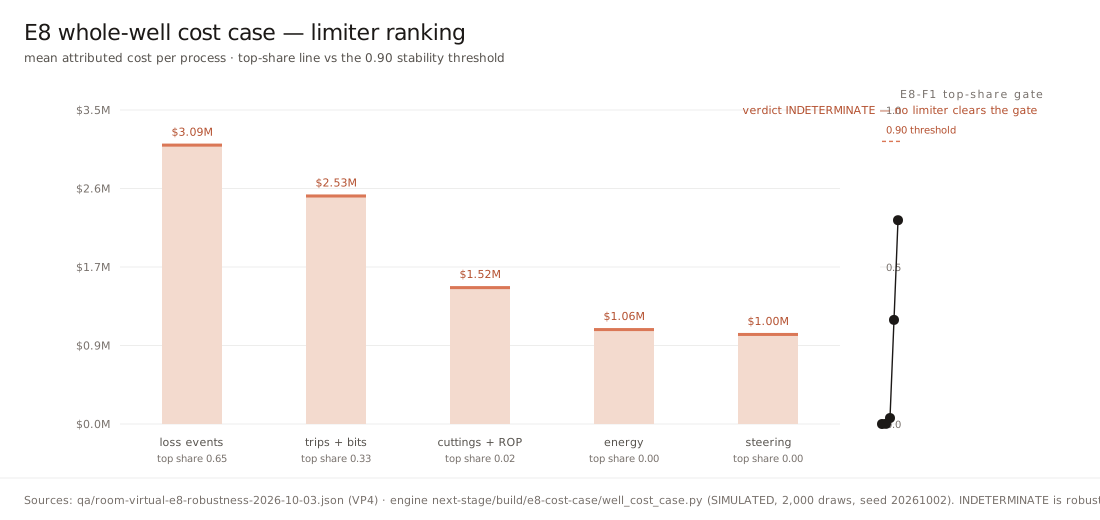
| 3 E8 cost limiter INDETERMINATE | a stable top limiter across the declared ranges | O-04 matched-bit ROP/bit-life tests | $80–150k (item 9) | robustly INDETERMINATE across 6 VP4 variants |
| 4 stroke-number divergence (25.8 vs 2.5–3 mm per 10 m) | the campaign measuring which reading the hardware needs | E7 stroke checkpoints (cycles 1–100) | inside item 5 | charted in VP6; resolves as relief strain 2.58e-3 |
| 5 conversion cost classes unquoted (RFQ can halve or double) | a scope-matched vendor offer inside the band | E3 RFQ offers vs P-E3-02 (≤$1,400/gross-kW) | $0 to ask | mechanism selected; RFQ is the open item |
| 6 escalation factor ±0.15 assumption (×1.60, 2007→2025 USD) | a quoted escalation basis from the vendors | RFQ price basis review | $0 to ask | moves every cost anchor about ±$130/gross-kW |
Stop rules are design features. The E7 gate stops after two consecutive breached checkpoints. The E8 case refuses to name a lever below the 0.90 stability threshold. The E5 seal filing halted when prior art blocked the claim, and the record says so.
Qualification is a permissioned operating record. Every campaign we run, witnessed and hashed, widens what we can certify and what a regulator or insurer will accept.
| surface | posture | note |
|---|---|---|
| duty-cycle rating method | product — protect by trade secret + published records | the qualification layer itself |
| measured duty maps (E1/E2/E6/E7/E8) | product — first-look design-partner class | exist only after the campaigns run |
| sliding-seal connector mechanism | blocked claim — US 11,041,343 (expires 2038-03-25) | filing halted; method and well-integrity engineering sell regardless |
| conversion mechanism (flash + binary) | published literature class; cost-stack know-how is the edge | RFQ will confirm or break P-E3-02 |
Partner routes are named by class, not by logo: national lab and hot-rock facility class (Sandia/Welltec/NER), university deep-underground lab class (EPFL/ESRF, Bedretto/OU), operator replay class (EGI/FORGE), and independent test-house class for the witnessed records. Named partners appear only with consent and a signed role.
The table is the human queue (next-stage/HUMAN-QUEUE.md). Assumed cost ranges, human approval on every spend above the batch rule.
| spend | cost (assumed) | the gate it closes |
|---|---|---|
| O-01 assembly specimens + campaign | $200–450k | E7-F1..F6 — the duty-cycle rating itself |
| O-02 loop fixtures + fault injection | $60–180k | E9-F1..F4 — control value and silent-failure refusal |
| E0/E9 500 h at 450 °C keystone run | $5–15k | DC-1 — P-E0-01, the cheapest decisive measurement |
| O-03 confined-flow campaign (partner-led) | $80–250k | E6-F1..F5 — the deliverability map |
| O-04 matched-bit ROP/bit-life tests | $80–150k | E8-F1 — naming the cost limiter or staying stopped |
| patent agent, rating-method surface | $320–640 | the filing call on the method surface |
Missions, not headcount. Each one is a piece of the company someone will own end to end.
The people registry holds the research and outreach record. It publishes nothing here: the disclosure line for names is a signed role plus consent, and that gate is human-only.
Every number carries its label. A simulated number reads SIMULATED everywhere it appears. A mislabeled number is fraud risk; a labeled one is an asset.
Virtual qualification is design authority and pre-registration. It is not qualification — analysis alone cannot demonstrate that hardware survives duty (IEEE Std 323).
No hardware in this record has logged an hour at duty. Zero of five hardware measurements. The P-rows are what the benches will confirm or kill.
Ladder rows, boxes, costs and schedules are plans and models on declared assumptions. They are not forecasts, offers or guarantees.
Nothing in this room is an offer of securities or a commitment to deliver hardware on any schedule.
Unfiled claim-surface mechanism detail is withheld until the filing decision. Partner names appear only with consent.
Any gate checker can be run live in front of you. Any record in this room can be opened on request, with its hashes.